What is the empty chair exercise?

Finding Your Voice: How the Empty Chair Exercise Helps You Heal

Explore our blog for insightful articles, personal reflections and ideas on topics that you may care about and that we are hoping will be thought provoking.
Finding Your Voice: How the Empty Chair Exercise Helps You Heal

Receiving a new medical diagnosis—whether it’s chronic, life-altering or just simply unexpected—can turn your world, mind, and body inside out. In an instant, life as you knew it may feel unfamiliar, unstable, and frightening. Whether you’ve been diagnosed with diabetes, multiple sclerosis, cancer, rheumatoid arthritis, or any other health condition, your body, identity, and future suddenly come into question.

Attachment theory provides a powerful framework for understanding how we connect with others, and how we respond or react to others' behavior. At the heart of this theory is the idea that our early dynamics with caregivers shape our attachment style—the patterns of emotional expressions we carry into and perform during adult relationships. Among the four primary attachment styles—secure, anxious, avoidant, and disorganized—avoidant attachment often flies under the radar.

Attachment theory has become an increasingly popular lens through which to understand our behavior in relationships, both romantic and platonic. Attachment theories suggest that the ways we connect with others are shaped by early experiences with caregivers. These experiences create internal "working models" of relationships, guiding our expectations, reactions, and needs.

For decades, HIV has deeply impacted the lives of, most commonly, biological males. In the United States and globally, they continue to bear a disproportionate share of the epidemic. Despite tremendous medical advances, including the widespread availability of PrEP and antiretroviral therapy (ART), HIV remains not just a medical condition—but a deeply personal, social, and psychological experience.

To use Acceptance and Commitment Therapy, known as ACT, in improving our lives and wellbieng, one of the core pillars to getting started is clarifying your personal values; this will feel uplifting as you redefine and embrace who you truly are. It's easy to lose sight of what truly matters to us and how this negatively influences our self esteem. We often make decisions based on fear, avoidance, or autopilot habits instead of what we deeply care about.
But what exactly are my values? And how do I figure out what they are, truly?
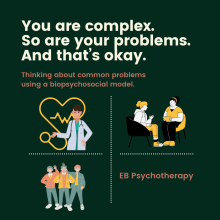
Life throws curveballs. Whether it’s stress from work, relationship challenges, chronic pain, or just a vague sense of unease, it’s easy to feel overwhelmed by your own problems. Over time, culture has adapted and many people know that these are times when it would be apporiate to seek out emotional support or mental healthcare services. This is a psychological approach. Laymen, however, might often forget to acknowledge the two other aspects to addressing sress: the physical and the socio-environmental. Physical refers to physiological symptoms and responses in the body, somatic factors.

Every night, your mind embarks on a journey—a deeply personal, often puzzling adventure we call dreaming. While dreams might seem like random images or surreal storylines, they can offer surprisingly rich insights into your inner world. Tracking and reflecting on your dreams can be a powerful, accessible tool for mental health and self-improvement. You don’t need to be a psychologist or mystic to benefit—just a curious mind and a little consistency.

Have you ever found yourself stuck in a cycle—feeling overwhelmed, frustrated, or even powerless—wondering why life keeps playing out the same way? Maybe it’s a job that never fulfills you, relationships that drain your energy, or goals that seem forever out of reach. If this sounds familiar, you’re not alone. But here’s a truth that might shake things up: the moment we take full responsibility for our lives is the exact moment we become powerful enough to change them.

In recent years, greater awareness has emerged around the unique challenges faced by individuals with learning disabilities, while, simultaneously, mental health is less and less stigmatized each year as the conversation grows in depth and urgency. Now, it's time to shift our attention to the center of that lesser known "venn diagram": what happens when these two areas intersect?