
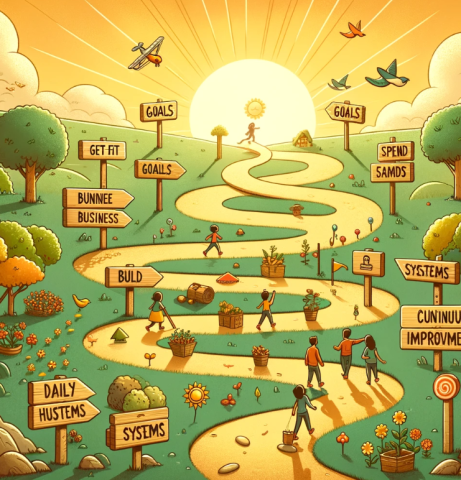
Scott Adams, the creator of the Dilbert comic strip, introduced me to this concept. Goals are about the results you want to achieve, while systems are about the processes that lead to those results.
- For Coaches: Your goal might be to win a championship, but your system is how you recruit players, manage your team, and structure practice sessions.
- For Entrepreneurs: Your goal could be to build a million-dollar business, but your system involves testing ideas, hiring staff, and running marketing campaigns.
- For Musicians: Your goal might be to learn a new piece of music, but your system includes your practice schedule, breaking down difficult measures, and getting feedback.
Why Systems Matter More Than Goals
Here are some of the problems with a goal-oriented approach:
1. Winners and Losers Have the Same Goals
Everyone wants to win, but not everyone succeeds. Setting goals isn’t enough because winners and losers often have the same targets. It wasn’t the goal of winning the Tour de France that led the British cycling team to the top but their system of continuous small improvements.
2. Achieving a Goal is Only a Momentary Change
You might set a goal to clean a messy room, and once you summon the energy, it’s tidy—for now. But if your habits don’t change, the clutter will return. The solution? Change the system that causes the mess, not just the result.
3. Goals Restrict Your Happiness
“If I reach my goal, then I’ll be happy.” This mentality keeps pushing happiness into the future. Goals create a binary mindset where you’re either successful or a disappointment. Systems, on the other hand, let you find joy in the process itself.
4. Goals Conflict with Long-Term Progress
Goals can lead to a “yo-yo” effect. Think of runners who train hard for months but stop after crossing the finish line. Without a new goal, motivation wanes. Systems encourage long-term thinking and continuous improvement.
Shifting to a Systems-First Mentality
Goals are good for setting a direction, but systems help you make progress. True, lasting success comes from a commitment to continuous refinement and improvement.
So, how can you create your own systems?
- Identify Daily or Weekly Habits: Choose small actions that, when done consistently, will bring you closer to your desired outcome.
- Monitor Your Progress: Find a way to measure your system’s performance, whether it's tracking daily habits or using feedback loops.
- Celebrate Small Wins: Enjoy every little improvement as you move forward, staying motivated and positive.
- Refine and Adapt: Be willing to tweak your system based on what works and what doesn’t.
The journey is more important than the destination. By focusing on systems, you'll find joy in the process and progress toward your goals.
This content is borrowed from the book "Atomic Habits: An Easy & Proven Way to Build Good Habits & Break Bad Ones" by James Clear.
Book: https://a.co/d/hGPq0Cg