
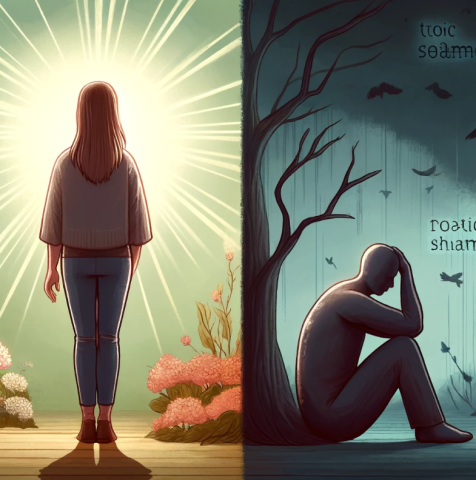
Understanding Healthy Shame
Healthy shame is a natural emotion that reminds us of our limitations. It's a crucial part of being human, signaling that we aren't perfect and that it's okay to have limits. Unlike the false promises of unlimited power often promoted by self-help gurus, recognizing our limits keeps us grounded and authentic.
Neurotic Shame
Neurotics tend to blame themselves for everything, while those with character disorders blame the world. "The neurotic assumes too much responsibility, the person with a character disorder not enough. When neurotics are in conflict with the world, they automatically assume that they are at fault. When those with character disorders are in conflict with the world, they automatically assume the world is at fault."
Toxic Shame
Toxic shame goes beyond feeling ashamed of specific actions. It becomes a pervasive sense of being fundamentally flawed. This internalized shame disrupts one's sense of self and leads to feelings of worthlessness and self-contempt. Unlike healthy shame, which helps set boundaries, toxic shame becomes a core part of one's identity, causing deep inner pain and a sense of being untrustworthy.
The Development of Toxic Shame
Unlike guilt, which relates to specific actions, toxic shame affects one's entire sense of being. Internalizing shame involves several processes:
- Identification with Shame-Based Models: People naturally identify with their caregivers and surroundings. When caregivers are shame-based, children absorb this shame.
- Trauma of Abandonment: Children need mirroring from caregivers to develop a sense of self. Without it, they feel abandoned and lose their authentic self.
- Binding of Feelings, Needs, and Drives: When natural emotions and needs are bound by shame, individuals feel ashamed of their basic human experiences.
Breaking the Cycle
Understanding and addressing toxic shame is crucial for healing and personal growth. By recognizing the patterns and working towards self-acceptance, individuals can begin to break free from the binds of shame and build a healthier relationship with themselves and others.
This content is borrowed from the book "Healing the shame that binds you" by John Bradshaw.
Book: https://a.co/d/dragpHW