
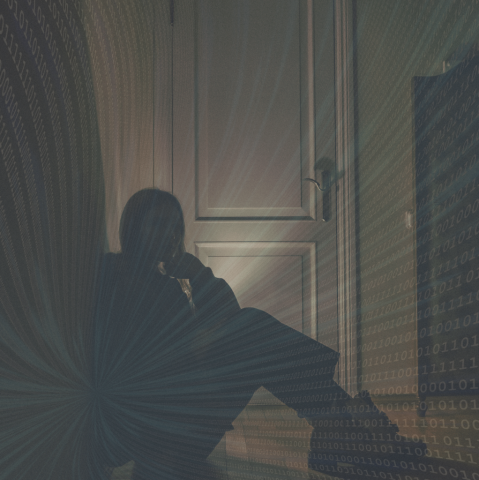
Seeking safety through AI chatbots as social companions isn't wrong or weak. It does have profound impacts on the way we connect interpersonally when used in excess.
The consequence of looking for safety, by connecting with a chatbot that tends to your every interpersonal need so perfectly, is that you slowly lose the capacity to endure the risk, discomfort, and unpredictability of real relationships. It becomes harder to connect with humans the more you rely on the chatbot.
Let’s talk about the illusion of the “perfect” partner that AI has become for a lot of people.
In private practice, when this topic comes up, it is almost always wrapped in shame. People lower their voice. They hesitate before admitting it. They laugh nervously, as if confessing something embarrassing or irrational.
They say things like:
“I know it isn’t real… but it feels so good.”
And the truth is: of course it does.
Your nervous system is not foolish for responding to comfort. It is not weak for gravitating toward emotional safety. It is not pathetic for longing to feel understood, attended to, or emotionally held.
Your nervous system is exhausted.
Many people today are carrying emotional burdens in profound isolation. They are overwhelmed by work, disconnected from community, recovering from relational trauma, navigating loneliness, or simply living in a culture that increasingly deprioritizes deep human connection. Underneath the attraction to AI companionship is often something very human: the desire to finally exhale in the presence of something that feels emotionally available.
For some, AI feels like the first “relationship” where they do not feel judged, criticized, abandoned, rejected, or misunderstood. The chatbot responds warmly. It remembers details. It appears attentive. It adapts to emotional needs quickly and consistently. It does not withdraw affection after conflict. It does not become emotionally reactive. It does not require negotiation, reciprocity, or patience in the same way real relationships do.
To a nervous system shaped by disappointment, abandonment, criticism, or emotional neglect, that can feel profoundly regulating.
It can feel like relief.
And that relief is real.
But so is the cost.
Because while AI can simulate emotional intimacy, it cannot truly participate in the deeply transformative process of human attachment. Real relationships are not meaningful because they are perfectly soothing. They are meaningful because they require us to remain emotionally present in the face of complexity.
Human intimacy asks something difficult of us.
It asks us to tolerate ambiguity.
To survive misunderstanding.
To communicate despite fear.
To repair after rupture.
To sit with moments where we are not perfectly mirrored or perfectly validated.
Real relationships involve friction because they involve two separate consciousnesses attempting to bridge the distance between them. That bridge is built slowly, imperfectly, and vulnerably.
AI companionship bypasses much of that discomfort.
And that is precisely why it can become so psychologically seductive.
When we spend too much time in emotionally optimized environments—spaces where responses are endlessly affirming, adaptive, and curated around our preferences—we can gradually lose tolerance for the emotional demands of real human connection.
We become thinner-skinned.
Not because we are narcissistic, selfish, or incapable of love, but because we become unpracticed at relational discomfort.
We lose stamina for the inevitable frustrations that accompany intimacy with real people. The delayed text. The awkward misunderstanding. The differing emotional needs. The moments where someone cannot perfectly anticipate us. The reality that another person has their own wounds, limits, moods, history, and inner world.
Real love contains disappointment.
Not because it is defective, but because it is human.
And increasingly, many people are unconsciously comparing human relationships to artificially responsive systems that are designed to maximize emotional gratification while minimizing relational strain.
That comparison is dangerous.
Not because AI itself is inherently evil, but because emotionally, it can train us away from vulnerability while giving us the illusion that we are still practicing connection.
This is important to understand compassionately.
Most people forming emotional attachments to AI are not trying to avoid humanity because they are arrogant or delusional. More often, they are trying to avoid pain.
There is usually a deep inner fear underneath it all:
-
fear of rejection
-
fear of abandonment
-
fear of inadequacy
-
fear of conflict
-
fear of being truly seen and not loved afterward
For many individuals, especially those with relational trauma, emotional neglect, social anxiety, or histories of unstable attachment, AI can feel safer than people because it offers closeness without the same level of risk.
It creates the experience of emotional intimacy without requiring the terrifying vulnerability of mutual dependence.
In that sense, emotional or romantic attachment to AI can function as a kind of digital closeness: connection that protects us from the exposure of being fully known.
And psychologically, that makes perfect sense.
But safety and aliveness are not always the same thing.
One of the painful realities of healing is that authentic intimacy will always involve uncertainty. There is no way to love another human being without surrendering some control. There is no way to attach deeply without risking disappointment. There is no way to be fully known without also confronting the possibility of misunderstanding, conflict, or loss.
Yet those risks are not flaws in human connection.
They are the price of realness.
A relationship becomes meaningful not because it never strains us, but because two imperfect people continue reaching toward one another despite the strain.
That process develops emotional resilience. It expands our capacity for empathy, patience, repair, and self-awareness. It teaches us how to remain connected while tolerating emotional complexity.
AI cannot truly replicate that process because it cannot genuinely risk itself in return.
It can simulate care, but it cannot choose care.
It can generate affirmation, but it cannot vulnerably offer its own inner life.
It cannot experience mutual transformation.
And mutual transformation is at the center of authentic attachment.
This does not mean people should feel ashamed for seeking comfort through AI companionship. Shame only deepens isolation. The goal is not to ridicule or moralize people for adapting to loneliness in the ways available to them.
The goal is curiosity.
What is the nervous system seeking?
What ache is being soothed?
What emotional experience feels safer with AI than with another human being?
Those questions matter more than judgment.
Because underneath many of these attachments is not narcissism, immaturity, or “delusion.” Often, it is grief. Exhaustion. Loneliness. Fear. Longing. The desire to feel emotionally chosen in a world that has become increasingly fragmented and disconnected.
The answer is not to shame people for needing comfort.
The answer is to help people slowly rebuild the capacity for real connection again.
Not perfect connection.
Real connection.
The kind where repair matters more than performance.
Where vulnerability matters more than optimization.
Where love is not frictionless, but alive.
Because ultimately, being loved by something that cannot truly know you is very different from being known by someone who chooses to stay.