
In Dr. Bagourdi's latest blog about AI, Synthetic Safety Net (linked below), she mentions the following quote:
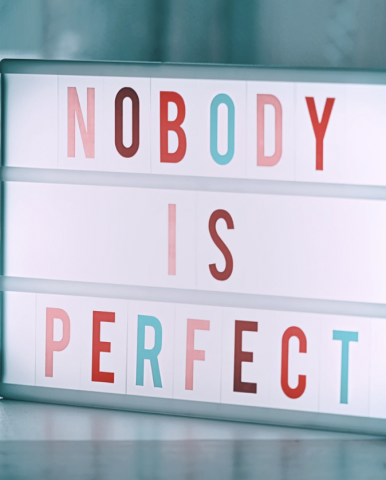
"For today: Don’t hide your real self because you fear rejection. Take a chance at dispelling avoidance and fear. Let yourself be seen. Let yourself be known. Be brave enough to be imperfect."
https://www.youtube.com/watch?v=s-HOFb2psXs
Let's elaborate on what this is all about.
Many people move through life with an invisible question running quietly in the background: “If people really knew me, would they still accept me?” That fear can shape relationships, careers, social interactions, and even the way we speak to ourselves. We learn to soften certain parts of our personalities, hide our insecurities, avoid vulnerability, or present a more polished version of ourselves in hopes of avoiding abandonment or rejection.
But the cost of hiding can become greater than the risk of being seen.
“For today: Don’t hide your real self because you fear rejection. Take a chance at dispelling avoidance and fear. Let yourself be seen. Let yourself be known. Be brave enough to be imperfect.”
This message speaks to one of the deepest struggles many people face: the tension between authenticity and self-protection. At its core, it is about learning that emotional safety does not come from perfection. It comes from genuine connection, self-acceptance, and the courage to exist honestly in front of others.
Human beings are wired for belonging. From an evolutionary perspective, rejection once threatened survival. Because of this, our brains are highly sensitive to judgment, exclusion, and criticism. Even today, emotional rejection can feel profoundly painful. Many people develop coping strategies designed to minimize that pain. Some become perfectionistic. Others become people-pleasers. Some avoid intimacy altogether. Others hide behind humor, productivity, achievement, or emotional distance.
These strategies are understandable. They often begin as attempts to protect ourselves.
The problem for some who start to feel too isolated is that protection can slowly become disconnection.
When we spend too much energy managing how we appear to others, we could begin to lose touch with our authentic selves. We may become admired but not truly known. We may feel surrounded by people yet emotionally lonely. We may receive validation while secretly fearing that others only love how we perform.
Avoidance often disguises itself as safety. If we do not fully reveal ourselves, we cannot fully be rejected. But we also cannot fully experience acceptance, intimacy, or emotional freedom. Vulnerability becomes the doorway to connection, even though it feels risky.
Many people believe authenticity means revealing everything to everyone at all times. In reality, healthy vulnerability does not have to be emotional overexposure. It is the willingness to exist honestly. It means allowing imperfections, emotions, needs, and humanity to be visible rather than constantly concealed.
Authenticity may look like admitting you are struggling instead of pretending you are fine. It may mean expressing an opinion that differs from others. It may mean setting boundaries instead of endlessly accommodating everyone around you. Sometimes it is simply allowing yourself to be imperfect without apologizing for your existence.
Perfectionism often develops from the belief that love and acceptance must be earned through flawlessness. If we can just say the right thing, achieve enough, appear strong enough, or avoid mistakes, then maybe we will finally feel secure. Yet perfectionism rarely creates peace. Instead, it creates chronic anxiety and self-monitoring.
Perfectionism says:
“If I am perfect, I will be safe.”
Authenticity says:
“If I am real, I will be free.”
The difference is profound.
Being imperfect in front of others can feel terrifying because it challenges the illusion of control. Yet imperfections are often what make people relatable, trustworthy, and emotionally approachable. People often bond through shared humanity. Think about the relationships that feel safest and most meaningful; typically these are the ones where people feel emotionally honest. Relationships can deepen when people feel permission to be human.
This is particularly important in a culture that often rewards performance over authenticity. Social media can intensify the pressure to appear constantly successful, attractive, productive, emotionally stable, or “put together.” Over time, comparison can convince people that everyone else has figured life out while they alone are struggling. But much of what people present publicly is curated.
Human life is far more complicated beneath the surface. Everyone experiences insecurity, grief, confusion, fear, disappointment, and moments of self-doubt. Pretending otherwise often increases shame and isolation.
Shame thrives in secrecy.
When people believe their struggles make them unworthy of love or belonging, they hide. The paradox is that hiding often strengthens shame, while safe vulnerability weakens it. When someone shares honestly and is met with compassion rather than rejection, the nervous system begins learning a new possibility: “I can be imperfect and still be accepted.”
This does not mean every person will understand or validate us. Part of authenticity involves tolerating the reality that not everyone will resonate with who we truly are. Some relationships may shift when we stop performing. Some people may prefer the more convenient or agreeable version of us. That can be painful.
Yet living solely to avoid rejection often leads to abandoning ourselves in the process. Emotional resilience grows when people begin defining themselves internally rather than exclusively through external validation.
There is also an important difference between rejection and incompatibility. Not every disconnect means something is wrong with you. Sometimes people simply differ in values, communication styles, emotional depth, priorities, or needs. These can still be meaningful relationships. We can learn to connect and appreciate others despite differences. We have different relationships to serve different purposes. The process of becoming more authentic is gradual. It may begin with small moments:
-
Saying what you actually feel.
-
Asking for support.
-
Letting someone see your uncertainty.
-
Admitting you made a mistake without collapsing into shame.
-
Expressing needs without apologizing for having them.
-
Allowing yourself to rest instead of constantly proving your worth through productivity.
These moments matter because they slowly reshape the relationship you have with yourself.
Over time, authenticity creates a different kind of confidence — not the confidence of believing you are perfect, but the confidence of knowing you can survive being human. You no longer need to exhaust yourself maintaining an image that leaves no room for vulnerability.
“Let yourself be seen. Let yourself be known. Be brave enough to be imperfect.”
The more we hide ourselves to avoid rejection, the more disconnected we often become — from others and from ourselves. But when we allow ourselves to exist authentically, even imperfectly, we create the possibility for deeper relationships, greater emotional freedom, and a more compassionate inner life.
Sometimes the bravest thing a person can do is stop performing and simply be real.