
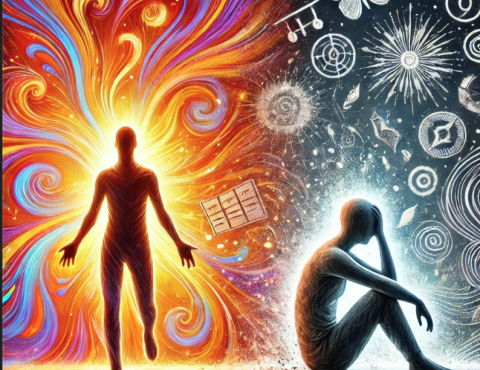
When it comes to mental health, certain conditions can appear deceptively similar, leading to misdiagnosis and misunderstandings. Two such conditions often confused with one another are bipolar disorder (specifically mania) and attention-deficit/hyperactivity disorder (ADHD). While both can present with high energy, impulsivity, and rapid speech, they are distinct conditions with different underlying causes, treatment approaches, and long-term management strategies. Understanding their differences is crucial for accurate diagnosis and effective treatment. Both bipolar mania and ADHD can involve the following symptoms:
-
Impulsivity: Acting without considering consequences
-
Hyperactivity: Excessive movement and restlessness
-
Difficulty with Attention: Trouble focusing, racing thoughts
-
Talkativeness: Speaking rapidly or excessively
At a glance, these similarities can make it challenging to differentiate between the two. However, the key distinctions lie in their underlying mechanisms, triggers, and symptom patterns. Bipolar disorder is a mood disorder characterized by episodes of depression and mania (or hypomania in bipolar II disorder).
-
Mood Cycles: Symptoms of mania come in episodes that last at least a week and are followed by depressive phases.
-
Episodic Nature: Mania does not persist indefinitely; it comes and goes in cycles.
-
Elevated or Irritable Mood: Unlike ADHD, where hyperactivity is more consistent, bipolar mania involves extreme euphoria or irritability that is out of character.
-
Grandiosity: People experiencing mania often have an inflated sense of self-importance, which is not common in ADHD.
-
Decreased Need for Sleep: Those in a manic state can go days with little to no sleep but still feel energetic.
-
Risky Behaviors: Increased engagement in reckless activities (spending sprees, risky sexual behavior, substance use, etc.) is more extreme than in ADHD.
ADHD is a neurodevelopmental disorder that affects attention, executive functioning, and impulse control. Accurate diagnosis is critical because treatment approaches for ADHD and bipolar disorder differ significantly. ADHD is often treated with stimulant medications, which can worsen symptoms of mania in individuals with bipolar disorder. On the other hand, bipolar disorder is managed with mood stabilizers and sometimes antipsychotic medications, which do not treat the core symptoms of ADHD.
-
Lifelong Condition: Symptoms are usually present since childhood and persist throughout life.
-
Consistent Pattern: Unlike the episodic nature of bipolar disorder, ADHD symptoms are relatively stable.
-
Hyperactivity vs. Mood Elevation: While hyperactivity is common, it is not accompanied by the extreme mood changes seen in bipolar disorder.
-
Inattention: Difficulty sustaining focus, forgetfulness, and trouble with organization are core features of ADHD.
-
Impulsivity in ADHD vs. Bipolar Mania: In ADHD, impulsivity is more about acting without thinking in a habitual way, whereas in bipolar mania, impulsivity is often part of a grandiose or risky mindset.
Misdiagnosis can lead to ineffective or even harmful treatment. Someone with undiagnosed bipolar disorder may receive stimulants for presumed ADHD, potentially triggering manic episodes. Conversely, someone with ADHD might receive mood stabilizers that do not address their core symptoms, leading to frustration and continued struggles. A thorough clinical evaluation by a mental health professional is necessary, often involving:
-
Detailed patient history
-
Observation of symptom patterns over time
-
Family history of mood disorders or ADHD
-
Input from family, teachers, or coworkers
By increasing awareness and understanding, we can help ensure that individuals receive the correct diagnosis and treatment, ultimately improving their quality of life. If you or someone you know is struggling with symptoms that seem like ADHD or bipolar disorder, seeking a comprehensive evaluation from a mental health professional is the best step forward.