
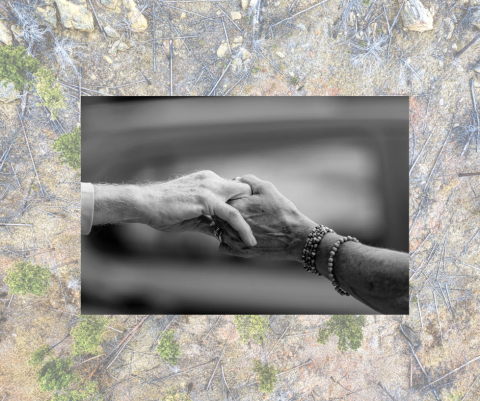
As Artificial Intelligence (AI) tools become woven into the fabric of daily life, an undercurrent of emotional fatigue is rising. Many people report feeling less inspired, less capable, or strangely disconnected from their own creativity. Beneath the excitement, a quieter cultural sentiment is forming: devaluation of the human spirit. This sense of devaluation emerges from subtle cultural shifts— how we measure contribution in a world where machines are desired to imitate so much of what humans do. Left unaddressed, it fosters apathy, hopelessness, and a melancholic tone that resonates through communities, organizations, and even entire generations. We feel we matter less.
Human beings have always tied meaning to contribution. We feel purposeful when our efforts matter, when our ideas shape something real. Even if people logically understand that human insight remains essential, emotionally the experience can feel like an erosion of uniqueness. Whole industries increasingly frame AI as the faster, cheaper, “smarter” solution. The message lands differently depending on who hears it. For some, it sparks an existential unease: a sense that the world is moving on without needing or caring about what they offer. This dynamic is especially challenging for young adults still developing their sense of identity, for older adults whose careers rely on intellectual expertise, and for creatives who have built self-worth around the originality of their work.
Today’s culture prioritizes efficiency. AI becomes a symbol of that acceleration: producing more content, more data, more output in less time. But human creativity operates on a different rhythm. Insight requires longstanding and dynamic connection with others and the environment. Art requires emotional alchemy. Problem-solving requires context, individualization, intuition, and lived experience. When speed becomes the dominant cultural value, the nonlinear reflective processes that build humanity are devalued. The more society organizes around AI-driven productivity, the more people subconsciously absorb the idea that thinking must be fast, optimized, and data-driven to be worthwhile. This is against our nature. This is against ancient wisdom. This is against the natural world, against Earth. It's a colonial problem. It won't have a capitalistic solution. We have to rely on wisdom beyond that.
Creativity has always been a core expression of emotional life. Art, writing, music, design, storytelling—these are not just skill sets; they are psychological territories built within us for a reason of survival. People explore identity, belonging, and meaning, and they develop tribes. Without all of this, apathy persists. The result is not anger so much as melancholy—a quiet grief for something that feels like it’s slipping away. Not just in the literal creative arenas, but the individual sense that human spirit is culturally less cherished.
Apathy and melancholy occur when people feel they have no capability or reason to provide a meaningful impact; they’re disconnected and disassociated. AI trends touch both vulnerabilities within us. These emotions accumulate quietly but pervasively, shaping a cultural climate that feels heavier, less hopeful, and less energized. Despite these challenges, the solution is not to reject AI but to consciously rebalance our cultural values. We must reassert what remains distinctly and irreplaceably human: depth, emotional truth, physical presence, intuition, and the active, ongoing creation of meaning through the natural world. In workplaces, this means honoring raw human judgment. In schools, it means nurturing original thinking, curiosity, and slow mastery. In creative communities, it means centralizing emotional resonance. In daily life, it means choosing connection, presence, and authentic expression.